If you own a home in Virginia Beach, Chesapeake, Norfolk, Suffolk, Portsmouth, Hampton, Newport News, or elsewhere in Hampton Roads, you may have noticed something when your homeowners insurance renewal arrived:
Your premium isn’t what it used to be.
Even homeowners who haven’t filed a claim may be seeing higher insurance costs. For many families, that naturally raises two questions:
Why is my homeowners insurance going up, and is there anything I can do about it?
There isn’t one simple answer. Homeowners insurance rates are affected by a combination of rebuilding costs, weather and catastrophe exposure, the characteristics of your home, your coverage and deductible selections, claims experience, and the insurance company providing the coverage.
Here in Hampton Roads, our coastal location adds another important factor.
At Armor Insurance Group, we work with homeowners throughout Hampton Roads, so we understand some of the unique insurance challenges that come with owning a home in Coastal Virginia.
Here are seven important reasons your homeowners insurance may be getting more expensive — and some steps you can take to potentially reduce the cost without sacrificing important protection.
1. Hampton Roads Has Greater Coastal and Storm Exposure
Location matters when an insurance company determines the cost of insuring a home.
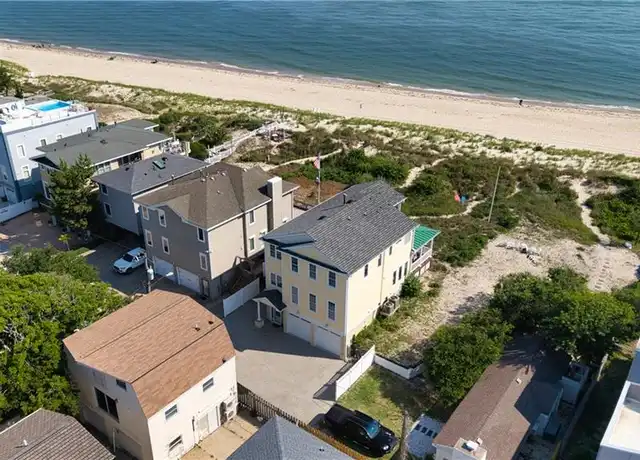
Hampton Roads is a coastal region exposed to hurricanes, tropical storms, high winds and other severe weather. Homes closer to the Atlantic Ocean, Chesapeake Bay and other bodies of water can present different risks than homes farther inland.
This is one reason homeowners insurance in Virginia Beach can cost considerably more than insurance on a similar home in another part of Virginia.
Recent 2026 insurance-market comparisons illustrate the difference. Insurify, for example, estimated an average premium of about $234 per month for $300,000 of dwelling coverage in Virginia Beach under its rating assumptions, compared with about $145 per month statewide.
Those figures should not be interpreted as what any particular homeowner will pay. Insurance premiums can vary significantly depending on the property, location, coverage, deductible, insurance company and individual underwriting factors.
The important takeaway is simpler:
Where your home is located can have a significant impact on the cost of insuring it.
2. It Costs More to Rebuild Homes
The market value of your house and the amount it costs to rebuild your house are two different things.
Homeowners insurance generally focuses on reconstruction cost — what it could cost to rebuild the structure after a covered total loss.
That can include expenses such as:
-
Construction labor
-
Lumber and building materials
-
Roofing
-
Electrical and plumbing work
-
HVAC equipment
-
Debris removal
-
Contractor costs
-
Building-code-related expenses
As those costs increase, the estimated replacement cost of your home may increase as well.
That can result in an increase in your Coverage A, or dwelling coverage, at renewal. Since the insurance company is protecting a larger dollar amount, the premium can increase even though you haven’t made any changes to your home.
This is one reason a homeowner can experience an insurance increase without ever filing a claim.
3. Your Roof Is Becoming Increasingly Important
One of the first questions many homeowners insurance companies ask today is:
How old is the roof?
Your roof is your home’s first line of defense against wind, rain and storms, making its age, condition and construction important underwriting considerations.
Depending on the insurance company and property, an older roof can potentially affect:
-
Eligibility
-
Premium
-
Deductible options
-
Available coverage
-
How a roof loss may be settled
If you recently replaced your roof, make sure your insurance agent knows.
Keep documentation showing when the work was completed, who performed it and what type of roof was installed.
An updated roof may make your property more attractive to certain insurance companies and can sometimes open additional insurance options.
4. Pay Attention to Your Hurricane, Wind and Named-Storm Deductibles
This is particularly important for Hampton Roads homeowners.
Your regular homeowners deductible may not necessarily be the deductible that applies to every storm-related loss.
The Virginia State Corporation Commission advises consumers that some homeowners policies have separate deductibles for wind, hail, named storms or hurricanes.
These deductibles can sometimes be expressed as a percentage of your dwelling coverage rather than a fixed dollar amount.
That distinction can be substantial.
For example:
What Does a Percentage Hurricane Deductible Actually Cost?
$300,000 Dwelling Coverage
1% Deductible: $3,000 | 2% Deductible: $6,000 | 5% Deductible: $15,000
$400,000 Dwelling Coverage
1% Deductible: $4,000 | 2% Deductible: $8,000 | 5% Deductible: $20,000
$500,000 Dwelling Coverage
1% Deductible: $5,000 | 2% Deductible: $10,000 | 5% Deductible: $25,000
$750,000 Dwelling Coverage
1% Deductible: $7,500 | 2% Deductible: $15,000 | 5% Deductible: $37,500
$1,000,000 Dwelling Coverage
1% Deductible: $10,000 | 2% Deductible: $20,000 | 5% Deductible: $50,000
Imagine owning a home insured for $500,000.
A 2% deductible would equal $10,000.
A 5% deductible would equal $25,000.
That’s very different from the $1,000 or $2,500 deductible a homeowner may think they have.
This is why we encourage homeowners to look beyond premium when comparing insurance quotes.
A lower premium isn’t necessarily a better insurance policy.
Ask what deductible applies when a hurricane, tropical storm, windstorm or other weather event damages your home.
5. Flood Insurance Is Separate From Homeowners Insurance
This is one of the most important insurance issues for Hampton Roads homeowners to understand.
Standard homeowners insurance does not cover flood damage.
The Virginia State Corporation Commission specifically advises consumers that flood damage requires separate flood coverage.
That’s particularly relevant in a region surrounded by the Atlantic Ocean, Chesapeake Bay, rivers and other waterways.
And don’t assume that you don’t need to think about flood insurance simply because your mortgage lender doesn’t require it.
A lender’s flood insurance requirement and your home’s actual exposure to flooding are not necessarily the same thing.
Flood insurance may be available through the National Flood Insurance Program (NFIP) or through private flood insurance companies.
If you aren’t sure whether flood insurance makes sense for your home, ask your insurance agent to review your options.
6. Insurance Companies Don’t All Price Homes the Same Way
This may be the most important thing for homeowners to understand.
There isn’t one homeowners insurance rate.
Insurance companies use their own underwriting guidelines and pricing models.
One company may be very competitive for a particular home while another may charge significantly more for the exact same property.
Factors can include:
-
Location
-
Distance from the coast
-
Age of the home
-
Roof age
-
Construction type
-
Replacement cost
-
Prior claims
-
Deductible selection
-
Protective devices
-
Coverage limits
-
Bundling home and auto
-
Other underwriting factors
Insurance companies also periodically change their rates and their appetite for certain types of properties.
A company that offered a competitive rate several years ago may not necessarily be your best option today.
That’s one of the advantages of working with an independent insurance agency.
Rather than being limited to a single insurance company, an independent agency can evaluate options from multiple carriers.
7. Your Renewal Is a Good Time for an Insurance Review
Receiving an insurance renewal shouldn’t simply be an exercise in paying the new premium.
It’s an opportunity to review your coverage.
Ask questions such as:
Is my dwelling coverage still appropriate?
What is my hurricane or wind deductible?
Is my roof information correct?
Are there discounts I’m missing?
Would combining my home and auto insurance save money?
Are there other insurance companies that may be more competitive?
Do I have adequate liability protection?
Should I consider water and sewer backup coverage?
Do I have flood insurance?
Have there been changes to my home that my insurance company should know about?
A good insurance review isn’t simply about finding a lower premium.
It’s about finding the right balance between coverage, deductible, insurance company and price.
What Can Hampton Roads Homeowners Do to Lower Their Insurance Costs?
If your homeowners premium has increased, there are several things worth reviewing.
Compare More Than One Insurance Company
Rates can vary considerably between carriers. Having an independent agency compare multiple insurance companies can uncover options you may not find by simply renewing your existing policy.
Review Your Deductibles
A higher deductible can sometimes lower your premium, but make sure it’s an amount you could comfortably pay after a loss.
And remember to check your separate wind, hurricane or named-storm deductible if one applies.
Consider Bundling Home and Auto
Many insurance companies offer significant multi-policy discounts when homeowners and auto insurance are placed together.
Even if your homeowners rate looks competitive by itself, looking at the combined cost of home and auto insurance may reveal additional savings.
Make Sure Your Home Information Is Accurate
Review information such as:
-
Square footage
-
Year built
-
Roof age
-
Construction type
-
Heating system
-
Renovations
-
Protective devices
-
Occupancy
Incorrect information can affect both your premium and your coverage.
Tell Your Agent About Major Home Improvements
Have you replaced your roof?
Upgraded your electrical system?
Replaced old plumbing?
Installed a monitored alarm or other protective equipment?
Tell your insurance agent. Improvements can affect underwriting and may sometimes create additional insurance options.
Don’t Reduce Coverage Just to Get a Cheaper Premium
Saving money is important.
Being adequately insured is more important.
A homeowners policy that’s $300 cheaper isn’t a bargain if it leaves you facing a $20,000 deductible you didn’t understand or removes coverage you actually need.
Compare policies based on value, not price alone.
Why Work With a Local Independent Insurance Agency?
Hampton Roads isn’t like every other insurance market.
A home near the Virginia Beach Oceanfront can present different insurance considerations from a home in Chesapeake, Suffolk or Newport News.
Coastal properties, older homes, flood exposure, roof requirements and wind deductibles can make shopping for homeowners insurance more complicated.
That’s where having a local independent insurance agency can help.
Armor Insurance Group is based in Virginia Beach and serves homeowners throughout Hampton Roads and Virginia.
As an independent insurance agency, we can review coverage and compare options from multiple insurance carriers rather than being limited to one company.
Our goal isn’t simply to find the cheapest homeowners policy.
It’s to help you find the right combination of coverage, insurance company and price for your individual situation.
Has Your Homeowners Insurance Gone Up?
If you received your renewal and wondered:
“Why did my homeowners insurance increase so much?”
It may be worth getting a second opinion.
Armor Insurance Group can review your existing homeowners policy, identify potential coverage issues and compare available options from multiple insurance companies.
Even if your existing policy remains your best option, you’ll have the peace of mind of knowing you reviewed it.
Request a Homeowners Insurance Review
Armor Insurance Group
Virginia Beach, Virginia
Serving Virginia Beach, Chesapeake, Norfolk, Suffolk, Portsmouth, Hampton, Newport News and communities throughout Virginia.
Already have homeowners insurance? Send us your current declarations page and let us review your coverage, deductibles and premium.
Buying a home? Contact Armor early in the process so we can help you evaluate homeowners and flood insurance options before closing.
Coverage availability, eligibility, discounts and premiums vary by insurance company and individual risk. This article is provided for general educational purposes and is not a statement of coverage. Actual coverage is determined by the terms, conditions, limitations and exclusions of the applicable insurance policy.